
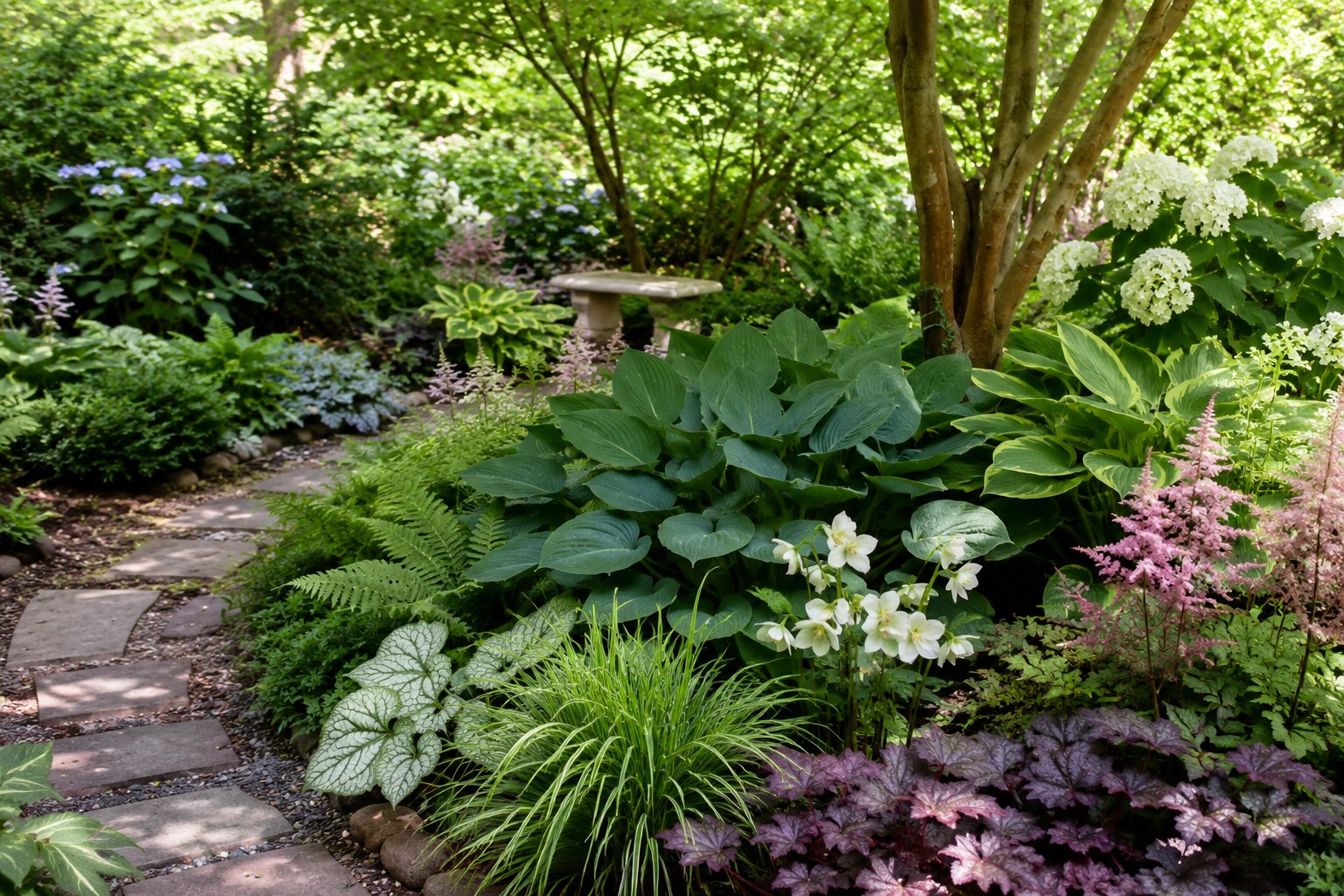
Shade does not have to mean boring.
Some of the most beautiful gardens are built around foliage, texture, soft color, and plants that thrive without intense direct sun.
The key is understanding what kind of shade you have and choosing plants that are suited to it.
Here are 12 plants worth considering for a beautiful shade garden.
1. Hosta
Hostas are classic shade plants because their foliage can carry an entire garden bed even when nothing is blooming.
They come in a wide range of sizes, colors, and leaf shapes.
Why they work:
- Excellent foliage texture
- Available in green, blue-green, chartreuse, and variegated forms
- Many sizes available
- Easy to layer with other shade plants
- Flowers attract pollinators
Hostas generally prefer moist, well-drained soil and protection from intense afternoon sun.
2. Heuchera
Heuchera, commonly called coral bells, is grown primarily for its colorful foliage.
Depending on the variety, leaves may be green, burgundy, caramel, silver, purple, or chartreuse.
Why it works:
- Long-lasting foliage color
- Compact size
- Works well near the front of beds
- Adds contrast among green plants
- Delicate flowers add seasonal interest
Good drainage is important.
3. Ferns
Ferns bring softness and movement to shaded spaces.
Their finely divided foliage contrasts beautifully with broad-leaved plants such as hostas.
Why they work:
- Excellent texture
- Natural woodland appearance
- Many varieties available
- Useful beneath trees
- Combine well with flowering shade plants
Moisture needs vary, so choose a fern suited to your particular conditions.
4. Astilbe
Astilbe produces feathery flower plumes above attractive foliage.
It works especially well in moist shade.
Why it works:
- Soft, airy flowers
- Adds vertical interest
- Available in white, pink, red, and lavender tones
- Attractive foliage
- Works beautifully in groups
Astilbe generally performs best when the soil does not dry out excessively.
5. Hydrangea
Many hydrangeas appreciate protection from harsh afternoon sun.
Depending on the species and climate, they can become substantial flowering anchors in a shade or part-shade garden.
Why they work:
- Large flower clusters
- Strong visual presence
- Long season of interest
- Excellent background or middle-layer plant
- Many varieties and sizes available
Light requirements vary considerably by type, so check the needs of the specific hydrangea you are considering.
6. Japanese Forest Grass
Japanese forest grass brings graceful, arching foliage to shaded beds.
Its fine texture and flowing habit make it especially useful along paths or beneath taller plants.
Why it works:
- Beautiful movement
- Softens garden edges
- Bright foliage can lighten dark areas
- Strong contrast with broad leaves
- Elegant, natural form
It generally prefers moisture-retentive soil and protection from intense heat.
7. Brunnera
Brunnera is valued for both its spring flowers and attractive heart-shaped foliage.
Many varieties have silver-patterned leaves that brighten shaded areas.
Why it works:
- Excellent foliage
- Small blue spring flowers
- Brightens dark beds
- Works well as a lower layer
- Attractive even after flowering
It prefers conditions that do not become excessively hot and dry.
8. Hellebore
Hellebores provide valuable interest when much of the garden is still dormant.
Their flowers often appear in late winter or early spring, depending on climate.
Why they work:
- Early-season flowers
- Attractive evergreen or semi-evergreen foliage in many climates
- Long-lived
- Tolerate shade
- Useful beneath deciduous trees
Once established, hellebores can become dependable structural plants in a shade garden.
9. Solomon’s Seal
Solomon’s seal has elegant arching stems lined with leaves and small hanging flowers.
It brings a naturally graceful woodland quality to shaded beds.
Why it works:
- Strong architectural form
- Attractive foliage
- Soft spring flowers
- Works well in naturalistic plantings
- Spreads gradually in suitable conditions
It pairs beautifully with ferns and hostas.
10. Japanese Painted Fern
Japanese painted fern adds silver, green, and sometimes burgundy tones to a shade garden.
It is especially useful when you want foliage that does more than simply provide green.
Why it works:
- Distinctive coloring
- Fine texture
- Compact habit
- Excellent contrast plant
- Works well in layered shade beds
Plant it where the subtle foliage color can be seen up close.
11. Carex
Many sedges in the genus Carex perform well in shade or part shade.
Their grassy texture adds movement without requiring a sunny location.
Why they work:
- Fine-textured foliage
- Many evergreen or semi-evergreen varieties
- Excellent edging plant
- Adds movement
- Useful in naturalistic planting schemes
Check the specific variety because sun, moisture, and hardiness needs vary.
12. Cast Iron Plant
Cast iron plant earns its name by tolerating conditions many plants dislike.
It is especially useful in deep shade and difficult areas.
Why it works:
- Tolerates low light
- Bold evergreen foliage in suitable climates
- Low maintenance
- Handles dry shade once established
- Strong architectural leaves
It is a particularly good choice where delicate shade plants struggle.
Understand Your Shade
Not all shade is the same.
A garden may have:
- Bright shade
- Dappled shade beneath trees
- Morning sun and afternoon shade
- Deep shade
- Dry shade
- Moist shade
Those differences matter.
A plant that thrives in moist woodland conditions may struggle beneath a large tree where roots compete heavily for water.
Use Foliage as the Foundation
In sunny gardens, flowers often dominate the design.
In shade, foliage becomes even more important.
Combine:
- Large leaves with fine leaves
- Dark green with chartreuse
- Silver foliage with deep green
- Upright forms with arching or spreading forms
This creates interest even when few plants are blooming.
Repeat Plants for a Fuller Look
Shade gardens often look especially beautiful when plants are repeated in generous groups.
Instead of using one hosta, one fern, and one heuchera, consider repeating each variety several times.
This creates broader areas of texture and color and helps the garden feel established.
Add Height and Structure
Do not make every shade plant low to the ground.
Use larger shrubs, small understory trees, tall ferns, or substantial foliage plants to create vertical layers.
Then place medium and low-growing plants around them.
The same layering principles that work in sunny beds also work in shade.
Pay Attention to Water Competition
Shade beneath a building and shade beneath a mature tree can behave very differently.
Large tree roots may absorb significant amounts of water, creating surprisingly dry soil.
Check the soil regularly while new plants establish and choose drought-tolerant shade plants when necessary.
A Shade Garden Can Be Lush
You do not need full sun to create a garden that feels abundant.
Build around foliage first, add flowers where conditions allow, repeat plants in groups, and use different heights and textures.
With the right plants, a shady part of the yard can become one of the most inviting areas in the garden.
Leave a Reply