
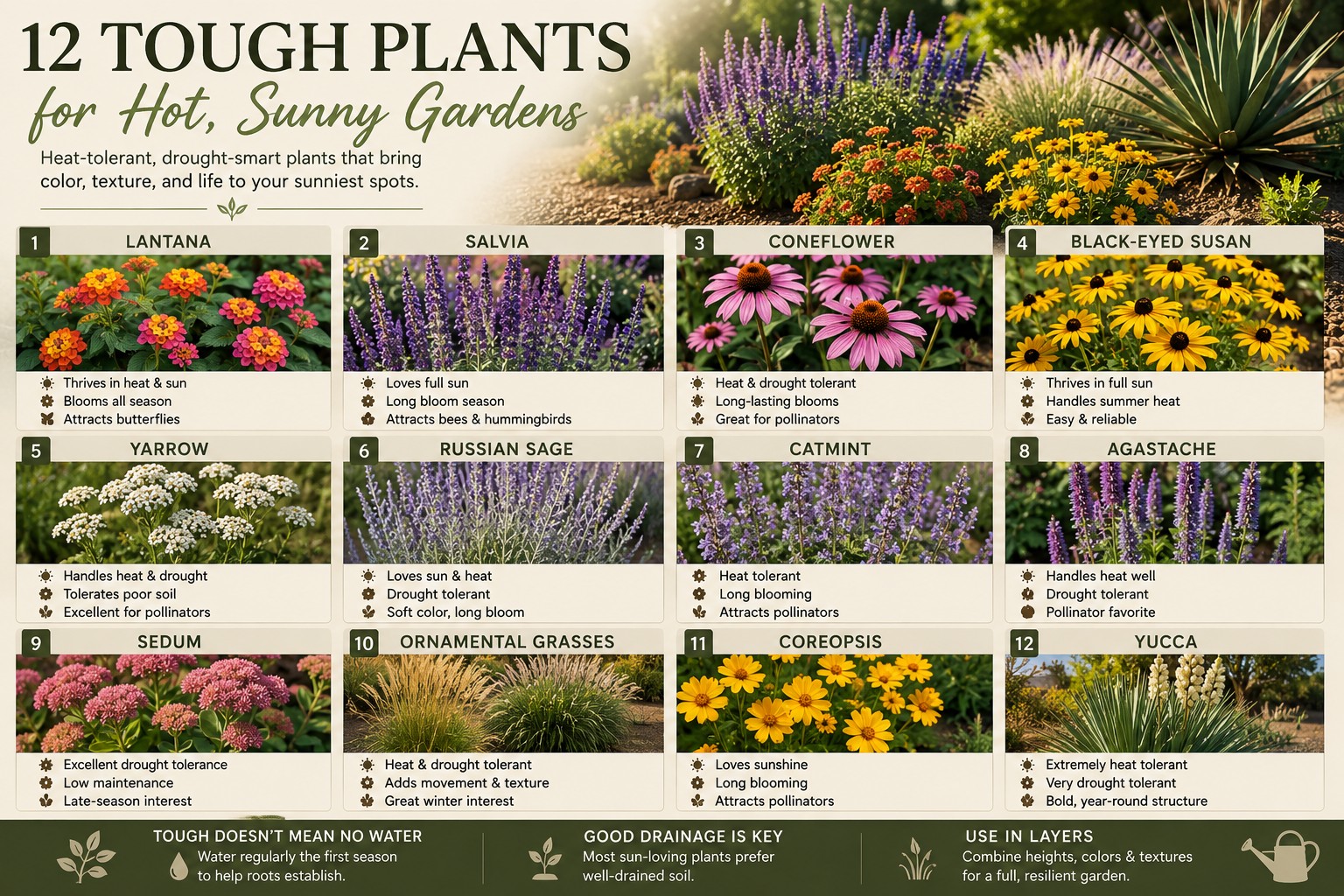
A hot, sunny garden can be beautiful, but it can also be unforgiving.
Plants that look perfect in spring may struggle once temperatures climb, especially in areas with intense afternoon sun, reflected heat, or long stretches without rain.
The key is choosing plants that are naturally better equipped to handle heat and sun rather than constantly trying to keep heat-sensitive plants comfortable.
Here are 12 reliable choices worth considering.
1. Lantana
Lantana is one of the toughest flowering plants for hot, sunny conditions.
It thrives in heat, blooms for a long season, and is generally drought tolerant once established.
Why it works:
- Handles intense sun
- Blooms heavily in heat
- Attracts butterflies
- Tolerates dry conditions
- Available in many colors and sizes
Give it well-drained soil and plenty of light.
2. Salvia
Many salvias are excellent choices for hot gardens.
They offer upright flower spikes, attract pollinators, and pair well with shrubs, grasses, and other flowering perennials.
Look for varieties suited to your climate, since hardiness and mature size can vary.
Why it works:
- Loves sun
- Handles heat well
- Long bloom season
- Attracts bees and hummingbirds
- Usually low maintenance
3. Coneflower
Coneflowers are dependable summer perennials in sunny beds.
Their large daisy-like flowers bring strong color through the hottest part of the growing season, and the seedheads can provide winter interest if left standing.
Why it works:
- Heat tolerant
- Drought tolerant once established
- Long-lasting blooms
- Good pollinator plant
- Adds height without becoming overly bulky
4. Black-Eyed Susan
Black-eyed Susan is another excellent choice for sunny summer beds.
The bright yellow flowers are especially useful when you want a garden to stay colorful through heat.
Why it works:
- Thrives in full sun
- Handles summer heat
- Easy to combine with other perennials
- Attracts pollinators
- Works well in naturalistic or cottage-style plantings
5. Yarrow
Yarrow is tough, drought tolerant, and especially useful in gardens where soil dries quickly.
Its flat flower clusters add a different shape among more rounded or upright blooms.
Why it works:
- Handles heat and drought
- Tolerates lean soil
- Long bloom season
- Fine-textured foliage
- Excellent for pollinators
Avoid overly rich or constantly wet soil.
6. Russian Sage
Russian sage brings soft silvery foliage and airy purple flowers to sunny gardens.
It is especially useful when you want a plant that looks light and graceful but can still handle difficult conditions.
Why it works:
- Loves sun
- Tolerates drought
- Handles heat well
- Silver foliage adds contrast
- Long flowering period
Good drainage is important.
7. Catmint
Catmint is a reliable low-to-medium-height perennial with soft gray-green foliage and lavender-blue flowers.
It works especially well along pathways or near the front of beds.
Why it works:
- Heat tolerant
- Drought tolerant once established
- Long blooming
- Softens hard edges
- Attracts pollinators
Some varieties can be trimmed after flowering to encourage fresh growth.
8. Agastache
Agastache, sometimes called hummingbird mint or anise hyssop depending on the species, thrives in sunny, well-drained conditions.
Its upright flower spikes add vertical interest and movement.
Why it works:
- Handles heat well
- Drought tolerant
- Pollinator favorite
- Long bloom season
- Fragrant foliage on many varieties
Avoid wet, heavy soil.
9. Sedum
Upright sedums are excellent for hot, dry areas and provide structure even when they are not in bloom.
Their thick leaves hold moisture, helping them tolerate dry conditions.
Why it works:
- Excellent drought tolerance
- Handles full sun
- Low maintenance
- Late-season flowers
- Strong fall and winter interest
10. Ornamental Grasses
Many ornamental grasses perform beautifully in hot, sunny conditions.
They add movement, texture, height, and winter structure.
Good choices depend on your region, but heat-tolerant varieties can become some of the most reliable plants in the garden.
Why they work:
- Excellent heat tolerance
- Often drought tolerant
- Add movement and texture
- Provide seasonal interest
- Pair well with flowering plants
Choose clumping varieties when you want to avoid aggressive spreading.
11. Coreopsis
Coreopsis is a cheerful flowering perennial that performs well in sunny beds.
Yellow is the most familiar color, although other shades are available depending on the variety.
Why it works:
- Loves sunshine
- Handles heat
- Long blooming
- Easy to mix with other perennials
- Attracts pollinators
Good drainage helps keep plants healthier.
12. Yucca
Yucca brings strong architectural structure to hot, dry gardens.
Its bold foliage provides year-round form in many climates, and mature plants can produce dramatic flower stalks.
Why it works:
- Extremely heat tolerant
- Very drought tolerant once established
- Evergreen in many regions
- Strong structural form
- Excellent for difficult sunny spots
Give yucca excellent drainage and enough room for its mature size.
Tough Does Not Mean No Water
Even drought-tolerant plants need regular water while they establish roots.
New plants may require close attention through their first growing season.
Once established, many of these plants can handle dry periods much better than moisture-loving varieties.
Pay Attention to Drainage
Many plants that tolerate heat and drought dislike sitting in wet soil.
If your garden has heavy clay or poor drainage, choose varieties that tolerate those conditions or improve the planting area before planting.
Heat tolerance does not automatically mean wet-soil tolerance.
Use Tough Plants in Layers
A resilient garden does not have to look sparse or desert-like.
Combine different forms to create a full planting.
For example:
- Ornamental grass or yucca for height and structure
- Salvia or agastache for vertical flowers
- Coneflower or black-eyed Susan for bold summer color
- Catmint or yarrow toward the front
- Sedum for late-season interest
Repeating those plants throughout the bed can create a garden that feels lush while still tolerating difficult conditions.
Choose for Your Climate
A plant can tolerate extreme heat but still be unsuitable for your winter temperatures.
Always check:
- Hardiness zone
- Mature size
- Soil preference
- Drainage needs
- Local humidity
- Winter cold tolerance
The best heat-tolerant plant is one that can handle both your summer and your winter.
With the right plant choices, a hot sunny garden does not have to become a constant watering and replacement project.
Choose plants built for the conditions, give them time to establish, and let their natural toughness do the work.
Leave a Reply