
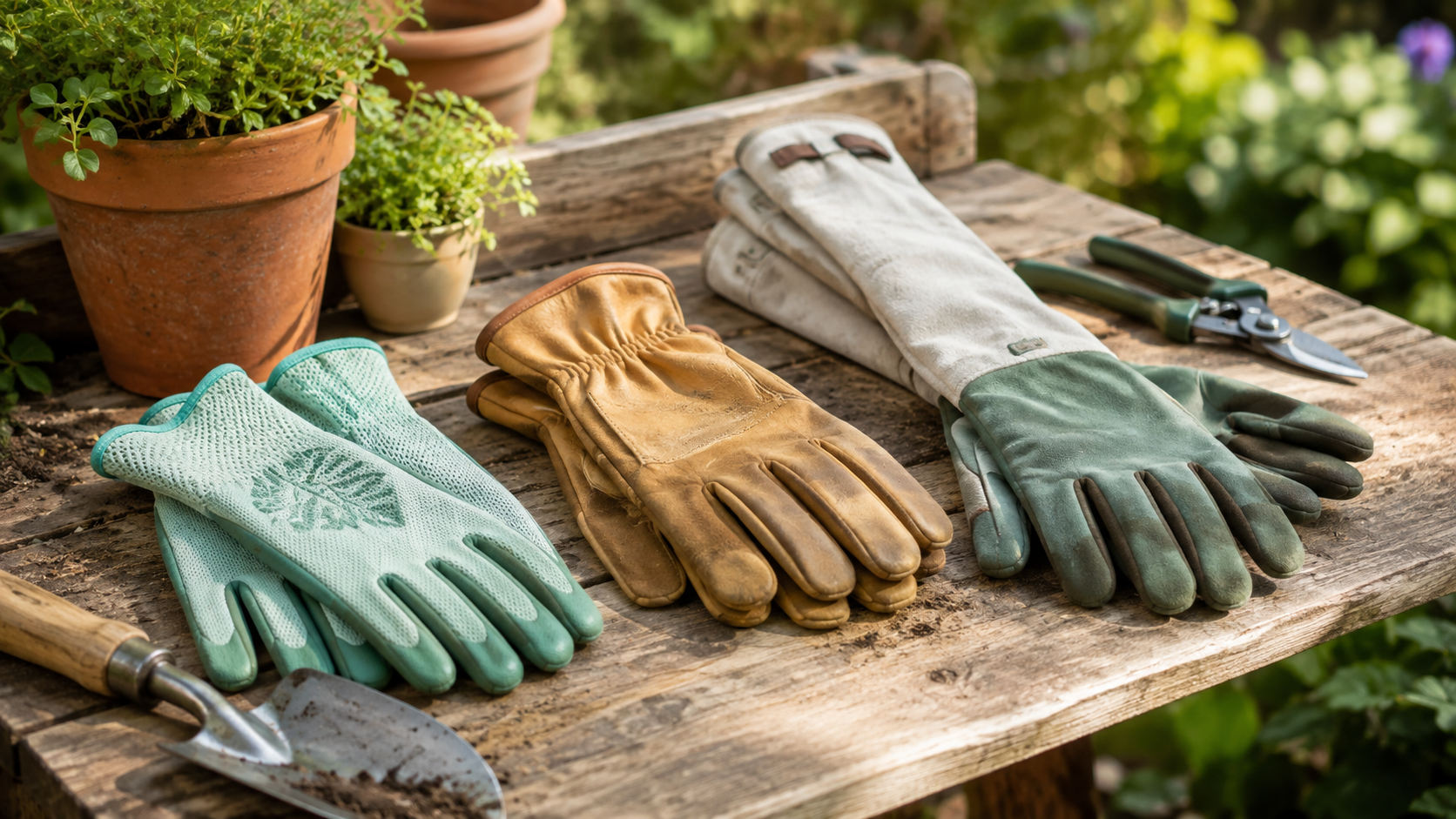
Garden gloves seem simple until you actually start using them.
A glove that works beautifully for planting annuals may be miserable for hauling mulch. A thick leather glove that protects your hands from rough branches may make it nearly impossible to handle tiny seedlings.
That is why we don’t think there is one “best” garden glove.
The better approach is to match the glove to the job.
For most home gardeners, having two or three different types of gloves makes more sense than trying to make one pair do everything.
1. Lightweight Gloves for Planting and Weeding
For everyday garden work, comfort and dexterity matter most.
Lightweight gloves are ideal for:
- planting annuals
- weeding
- potting
- deadheading
- transplanting small plants
- handling seed packets and labels
A good lightweight glove should fit closely enough that you can still feel what you are doing.
Look for breathable fabric and a coated palm that gives you grip without making the glove stiff.
What we like: Green Bamboo Garden Gloves
Green Bamboo Garden Gloves are a good example of a lightweight garden glove.
The bamboo-fiber knit helps the glove stay breathable, while the coated palm gives extra grip for working with soil, pots and hand tools.
This type of glove is especially useful in warm weather when heavier leather gloves can feel uncomfortable.
The tradeoff is protection.
A lightweight glove will not protect your hands well from heavy thorns, sharp branches or rough stone.
Best for: Everyday planting, weeding and light garden maintenance.
2. Leather Gloves for Digging and Heavy Garden Work
When the job gets rougher, your gloves need to do more than keep dirt off your hands.
Leather or reinforced work gloves are better for:
- shoveling
- hauling mulch
- moving rocks
- handling branches
- pulling stubborn weeds
- working with rough lumber or edging
These gloves are thicker and more abrasion-resistant than lightweight planting gloves.
What we like: Wells Lamont HydraHyde
The Wells Lamont HydraHyde Leather Gloves are designed for tougher outdoor work.
HydraHyde leather is water-resistant and abrasion-resistant, making it better suited for jobs where your hands are exposed to moisture, rough surfaces and repetitive wear.
They are bulkier than a lightweight garden glove, so they are not what we would choose for planting tiny seedlings or delicate pruning.
But for hauling bags of mulch or cleaning up branches, the added protection is worth it.
Best for: Digging, hauling and heavier garden chores.
3. Long Gauntlet Gloves for Roses and Thorny Shrubs
This is one category where the right glove makes an enormous difference.
If you regularly prune:
- roses
- blackberries
- bougainvillea
- thorny vines
- prickly shrubs
standard garden gloves simply do not protect enough of your arm.
Long gauntlet gloves extend beyond the wrist and help protect the forearm while you reach into dense or thorny plants.
What we like: Amazing Garden Long Thorn-Proof Rose Pruning Gloves
The Amazing Garden Long Thorn-Proof Rose Pruning Gloves use a long leather gauntlet design that protects both the hand and forearm.
That extra coverage is the main reason to own this type of glove.
They are warmer and less flexible than everyday garden gloves, but that is a fair tradeoff when working around serious thorns.
Best for: Roses and thorny pruning jobs.
4. Waterproof Gloves for Wet Garden Chores
Some jobs are simply messy and wet.
Think:
- cleaning ponds
- working in muddy beds
- rinsing containers
- handling wet compost
- pulling weeds after heavy rain
For these jobs, waterproof or water-resistant gloves are useful because soggy fabric gloves become uncomfortable quickly.
The important distinction is between water-resistant and waterproof.
Water-resistant gloves can handle damp conditions.
Fully waterproof gloves are better when your hands will actually be submerged or exposed to constant water.
For most garden work, water-resistant leather or coated gloves are enough.
Best for: Damp soil, wet cleanup and messy garden chores.
5. Gloves for Hot Weather
In hot climates, glove comfort matters more than people expect.
A heavy glove that protects well but makes your hands unbearably hot will probably end up sitting in the garage.
For summer gardening, look for:
- breathable backs
- lightweight knit fabric
- flexible coatings
- snug but not tight fit
Avoid thick gloves unless the job actually requires them.
For routine weeding and planting, breathable bamboo or knit gloves are much more comfortable.
Best for: Summer garden maintenance and long planting sessions.
6. Gloves for Pruning
Most pruning jobs do not require special pruning gloves.
For ordinary shrubs and perennials, a flexible glove with good grip is enough.
But the plant matters.
For:
- smooth-stemmed shrubs
- small tree branches
- perennials
use a comfortable everyday glove.
For:
- roses
- thorny shrubs
- spiny vines
use gauntlet-style gloves.
For:
- larger branch cleanup
- hauling cut limbs
switch to leather work gloves.
The glove should match the plant and the cleanup work that follows.
How Many Pairs Do You Actually Need?
For most home gardeners, we think three types cover nearly everything:
1. Lightweight planting gloves
For everyday gardening.
2. Leather work gloves
For digging, hauling and rough work.
3. Long thorn-resistant gloves
For roses and prickly shrubs.
That is usually more useful than owning six pairs of nearly identical garden gloves.
Fit Matters More Than Brand
A glove can have excellent materials and still be miserable if it does not fit correctly.
A garden glove should:
- fit snugly without squeezing
- allow you to bend your fingers easily
- stay in place when pulling weeds
- not leave a large amount of extra fabric at the fingertips
Too-large gloves reduce dexterity.
Too-small gloves quickly cause hand fatigue.
If possible, try gloves on before buying them, especially heavier leather styles.
When to Replace Garden Gloves
Garden gloves do not need to look new to keep working.
A little dirt and wear are completely normal.
Replace them when:
- the fingertips wear through
- the palm coating separates
- seams open
- thorns can penetrate damaged areas
- the glove no longer fits securely
Lightweight gloves will generally wear out faster than quality leather gloves, which is one reason we would not overspend on basic planting gloves.
Where We Would Spend — and Where We Would Save
For lightweight planting gloves, we would save.
They get dirty, wet and worn, and even very good pairs eventually need replacing.
For thorn-resistant gauntlet gloves, we would spend a little more.
Good leather and adequate arm protection make a noticeable difference when you are reaching into a mature rose.
For heavy work gloves, durability matters more than garden-specific branding.
A well-made leather work glove can often do the job perfectly.
Match the Glove to the Garden Job
You do not need a special glove for every gardening task.
But you also should not expect one pair to handle everything.
A lightweight glove gives you dexterity.
A leather glove gives you protection.
A long gauntlet gives you protection where ordinary gloves stop.
Choose the pair that makes the job safer and more comfortable.
That is ultimately what a good garden glove is supposed to do.
Leave a Reply