
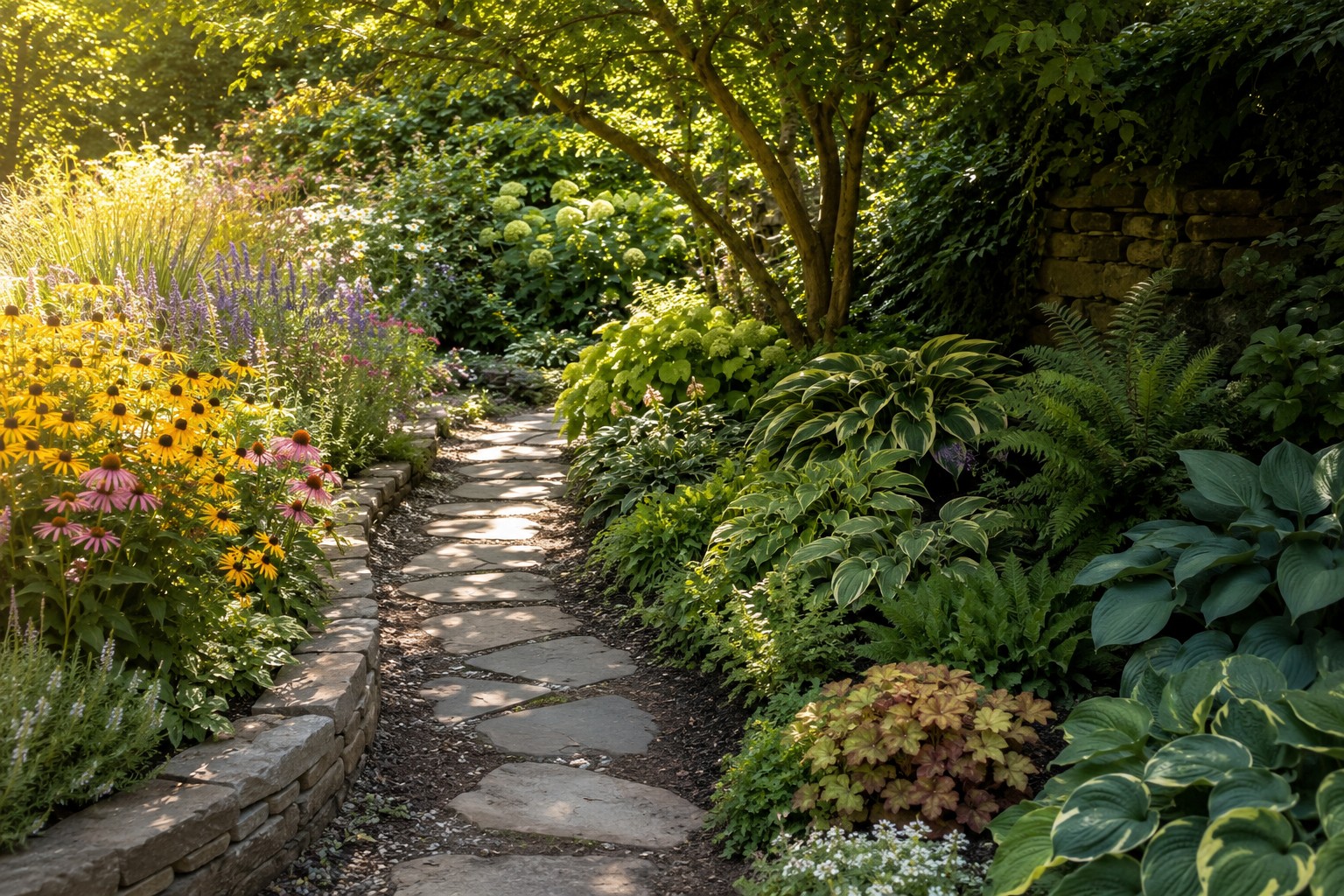
When a plant tag says full sun, part sun, or part shade, it sounds simple enough. But those labels can be surprisingly misleading if you don’t also think about when the sun hits, how intense it is, and how hot that part of the garden gets.
Understanding those differences can save you from a lot of struggling plants.
Full Sun
Full sun generally means 6 or more hours of direct sunlight each day.
That does not mean every full-sun plant wants to bake in intense afternoon heat.
In cooler climates, six to eight hours of sun may be fairly gentle. In hotter regions, strong late-afternoon sun can be much harsher.
When choosing a full-sun plant, also consider:
- Whether the sun is morning or afternoon
- How hot the location becomes
- Whether nearby pavement or walls reflect additional heat
- How quickly the soil dries
- Whether the plant is known to tolerate high summer temperatures
Some plants genuinely thrive in blazing sun. Others prefer plenty of light but perform better with protection during the hottest part of the day.
Part Sun
Part sun usually means about 4 to 6 hours of direct sunlight per day.
Plants labeled part sun generally need a meaningful amount of direct light to grow and bloom well.
A location with four hours of morning sun may behave very differently from one with four hours of late-afternoon sun.
If a plant is grown mainly for flowers, fruit, or strong color, too little sun may result in:
- Fewer blooms
- Leggy growth
- Weaker stems
- Less intense foliage color
Part Shade
Part shade generally means about 3 to 6 hours of direct sun, with some protection from intense heat.
This is where timing matters most.
Many part-shade plants are happiest with:
Morning sun + afternoon shade
That gives them enough light for healthy growth without exposing them to the hottest sun of the day.
A spot that gets four hours of afternoon sun may technically fall into the same hour range, but it can be much more stressful for shade-loving plants.
Full Shade
Full shade does not usually mean complete darkness.
Most shade plants still need bright indirect light or filtered light throughout the day.
Full shade generally means fewer than about 3 hours of direct sun, often with dappled or reflected light for the rest of the day.
Typical full-shade locations include:
- Beneath mature trees
- The north side of a house
- Covered patios
- Areas shaded by fences or nearby structures
Even within a shaded garden, light levels can vary considerably.
Morning Sun vs. Afternoon Sun
This is one of the most important things to understand when reading plant labels.
Morning sun is usually cooler and gentler.
Afternoon sun is hotter and more intense.
A plant that happily grows in six hours of morning sun may scorch in four hours of western afternoon exposure, especially in a hot climate.
When evaluating a planting spot, don’t just count the hours.
Ask:
- What time does direct sunlight begin?
- What time does it end?
- Is the area shaded during the hottest part of the day?
- Does the location receive reflected heat?
- Does the soil stay moist or dry quickly?
Dappled Light
Dappled light is the shifting mixture of sun and shade you often see beneath trees.
Some woodland plants and shade-loving perennials thrive in this type of light because they receive brightness without prolonged exposure to intense direct sun.
But remember that tree canopies change throughout the year.
A bed beneath a deciduous tree may receive considerable spring sun before the tree fully leafs out and become much shadier by summer.
Watch the Spot Before You Plant
If you are unsure how much light an area receives, observe it for a day.
Check the area around:
- 8 a.m.
- 10 a.m.
- Noon
- 2 p.m.
- 4 p.m.
- 6 p.m.
Write down whether the spot is in direct sun, filtered light, or shade.
You may discover that what you thought was a shady bed actually receives several hours of intense afternoon sun.
Seasons Change the Light
Sun exposure is not fixed throughout the year.
The angle of the sun changes with the seasons, and trees gain or lose leaves.
A location that is sunny in early spring may be deeply shaded by midsummer.
Buildings, fences, and neighboring trees can also change how sunlight reaches the garden as the seasons shift.
Use Plant Labels as a Starting Point
Plant tags are helpful, but they are not absolute rules.
Two gardens in the same hardiness zone can have completely different growing conditions.
Use the label as a starting point, then consider:
- Your climate
- Summer temperatures
- Humidity
- Soil moisture
- Wind
- Reflected heat
- Morning versus afternoon exposure
The goal is not simply to match a plant to a number of sunlight hours.
It is to understand what those hours actually feel like in your garden.
Once you start paying attention to both the amount and timing of sunlight, choosing the right plants becomes much easier.

Leave a Reply