
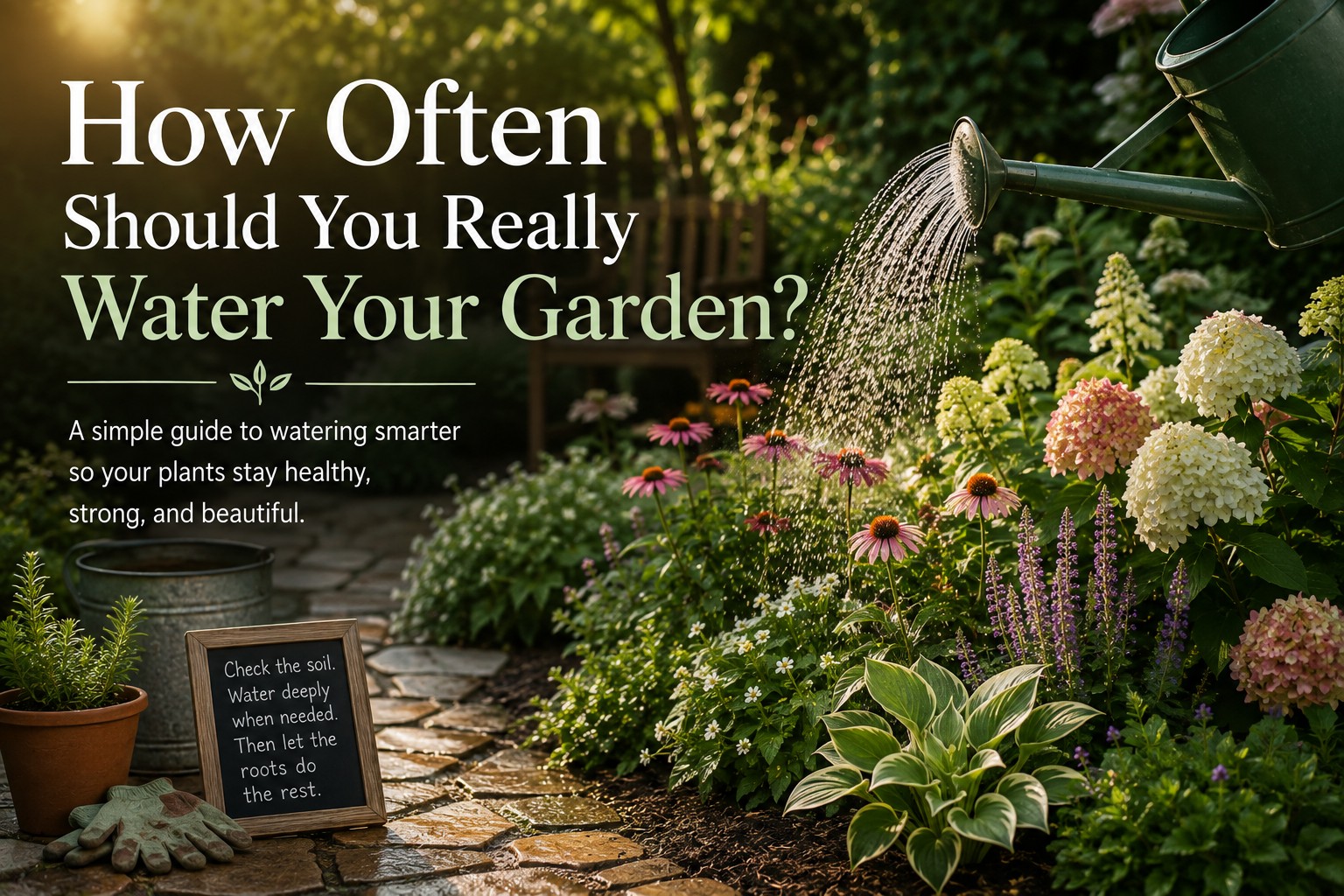
Watering sounds simple until you start gardening.
Too little water can stress plants, stunt growth, and cause leaves to wilt or scorch. Too much water can be just as damaging, leading to root problems, yellowing foliage, disease, and weak growth.
The right watering schedule depends on more than the calendar. Soil, weather, plant type, root depth, and how recently something was planted all matter.
Start With the Soil
Before turning on the hose, check the soil.
Push your finger a few inches into the ground near the plant. If the soil still feels cool and moist below the surface, you may not need to water yet.
If it feels dry several inches down, it is probably time.
The surface can dry quickly while the soil underneath still holds plenty of moisture, so judging by appearance alone can lead to overwatering.
New Plants Need More Attention
Newly planted trees, shrubs, and perennials usually need more frequent watering while their roots become established.
During the first several weeks, check them often.
You may need to water several times a week during hot or dry weather, especially if the plant has a small root system.
As roots grow into the surrounding soil, gradually reduce the frequency and encourage deeper watering.
Established Plants Usually Need Less Frequent Watering
Once plants are established, deeper and less frequent watering is usually better than small amounts every day.
Deep watering encourages roots to grow farther into the soil, where moisture is more stable.
Shallow, frequent watering can encourage roots to remain near the surface, making plants more vulnerable during heat and drought.
Water Deeply
When you water, the goal is to moisten the root zone rather than simply wet the top layer of soil.
For many garden plants, this means allowing water to soak several inches into the ground.
Slow watering works best because it gives the soil time to absorb moisture instead of allowing water to run off.
Drip irrigation, soaker hoses, or a hose set to a gentle flow can all work well.
Morning Is Usually the Best Time
Early morning is generally the best time to water.
Temperatures are cooler, evaporation is lower, and plants have time to absorb moisture before the heat of the day.
Morning watering also gives wet foliage time to dry.
Watering late in the evening is not always a problem, especially at the soil level, but repeatedly leaving foliage wet overnight can sometimes encourage fungal disease.
Hot Weather Changes Everything
A normal watering schedule may not be enough during extreme heat.
During very hot weather, plants lose moisture more quickly and soil can dry faster than usual.
Pay particular attention to:
- Newly planted trees and shrubs
- Containers
- Plants near pavement or stone
- Plants exposed to strong afternoon sun
- Shallow-rooted plants
Containers may require daily watering during very hot weather because their limited soil volume dries quickly.
Soil Type Matters
Different soils hold water differently.
Clay Soil
Clay soil holds moisture for a long time but absorbs water slowly.
Watering too quickly can cause runoff before the soil has absorbed enough moisture.
Slow, deep watering works best.
Sandy Soil
Sandy soil drains quickly and may need more frequent watering.
Because it does not hold moisture as long, plants can dry out faster during hot weather.
Loamy Soil
Loamy soil generally provides a good balance between drainage and moisture retention.
It still needs monitoring, but watering tends to be easier to manage.
Mulch Helps Hold Moisture
A layer of mulch can make a noticeable difference in how quickly garden soil dries.
Mulch helps:
- Reduce evaporation
- Keep soil temperatures more stable
- Suppress weeds that compete for water
- Protect soil from crusting and erosion
For most beds, a layer about 2 to 3 inches deep is enough.
Keep mulch pulled slightly away from plant stems and tree trunks.
Watch the Plant, Not Just the Calendar
Instead of automatically watering every Tuesday and Saturday, pay attention to what the plant and soil are telling you.
Signs a plant may need water include:
- Wilting that does not recover in the evening
- Dry soil several inches below the surface
- Leaves becoming dull or curling
- Dry, crispy leaf edges
- Slowed growth during active growing season
But remember that wilting can also happen from heat stress or root problems, so always check the soil before assuming the plant needs more water.
Signs You May Be Watering Too Much
Overwatering can look surprisingly similar to underwatering.
Watch for:
- Yellowing leaves
- Constantly wet soil
- Soft or dark stems
- Leaf drop
- Fungus or algae on the soil surface
- Plants that wilt even though the soil is wet
Roots need oxygen as well as water. Soil that stays saturated can prevent roots from functioning properly.
Do Not Forget Rainfall
A rain gauge is one of the simplest tools you can use in the garden.
A brief shower may make the surface look wet while providing very little usable moisture.
A slow, soaking rain may eliminate the need for irrigation for several days.
Check how much rain you actually received rather than assuming the garden was watered.
A Good Rule of Thumb
Many established garden plants do well with roughly 1 inch of water per week, including rainfall.
But treat that as a starting point, not a strict rule.
Your garden may need more or less depending on:
- Temperature
- Wind
- Soil type
- Plant variety
- Sun exposure
- Root depth
- Recent rainfall
The Best Watering Schedule Is Flexible
There is no single watering schedule that works for every garden.
The best approach is to water deeply, check the soil before watering again, and adjust as weather and plant needs change.
Over time, you will begin to recognize how quickly different areas of your garden dry out.
That is more useful than any fixed calendar.
Check the soil first. Water deeply when needed. Then let the roots do the rest.
Leave a Reply