
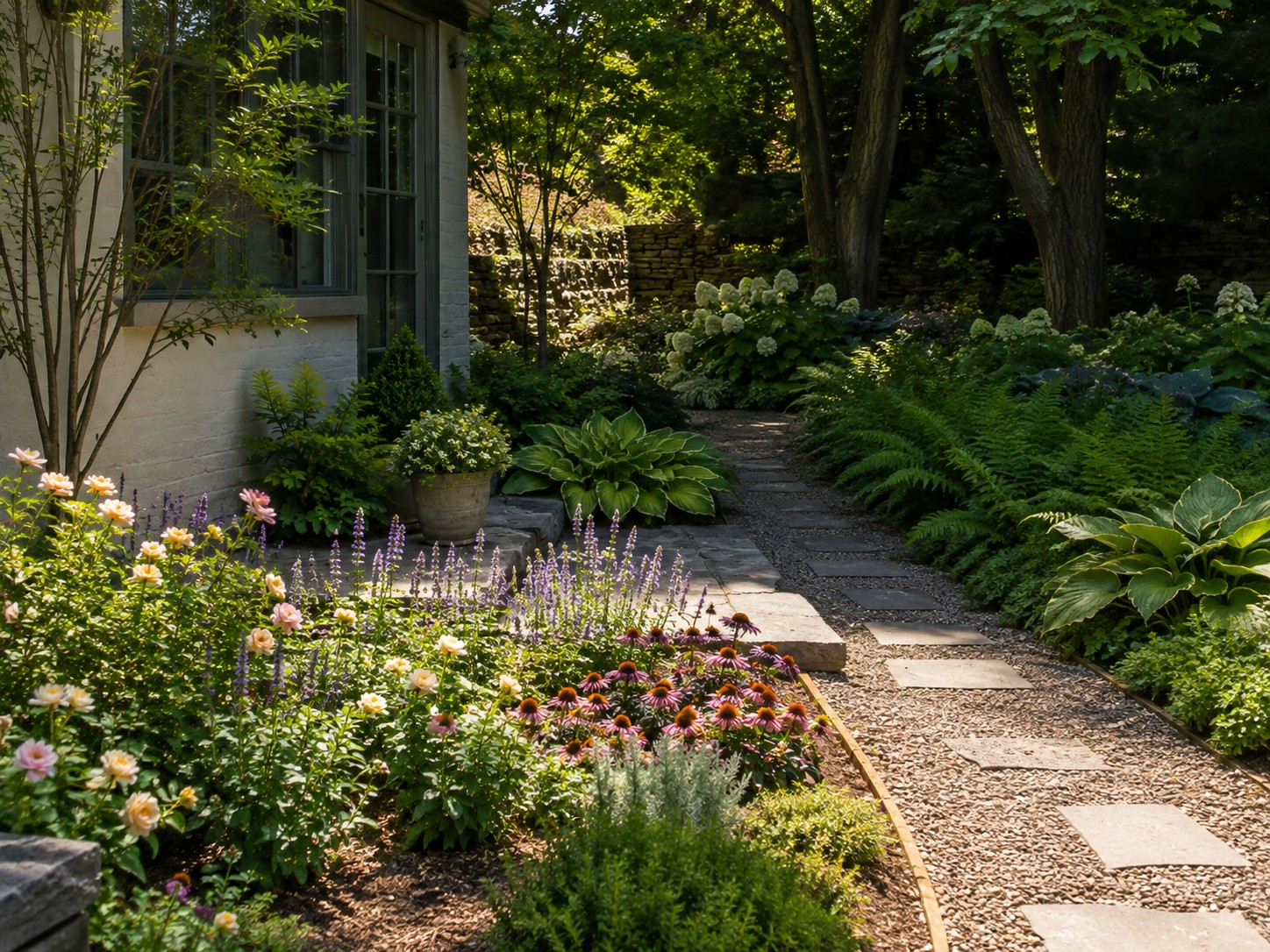
The easiest way to have a healthier, better-looking garden is to stop asking, “What plant do I like?” and start with, “What will actually thrive here?”
A beautiful plant in the wrong place usually becomes a frustrating plant. Before you buy, look at the conditions first: light, soil, drainage, climate, mature size, water needs, and how much maintenance you realistically want to give it.
Start With the Light
Plant tags usually use terms like full sun, part sun, part shade, and full shade, but the actual hours and timing of sunlight matter.
- Full sun: generally 6 or more hours of direct sun
- Part sun: roughly 4–6 hours of direct sun
- Part shade: roughly 3–6 hours, ideally with protection from the hottest afternoon sun
- Full shade: usually less than 3 hours of direct sun
Morning sun and afternoon sun are not equal. A plant that handles six hours of gentle morning sun may struggle with four hours of intense late-afternoon heat.
Check Your Soil and Drainage
Before planting, notice what happens after a heavy rain.
If water disappears quickly, you likely have well-drained soil. If puddles remain for hours or the soil stays soggy for days, drainage may be an issue.
Some plants tolerate heavy clay, while others need loose, well-drained soil. Improving the soil can help, but it is usually easier to choose plants that naturally suit your conditions.
Know Your Climate
Hardiness zones are useful, but they are only part of the picture.
Also consider:
- Summer heat
- Humidity
- Winter lows
- Wind exposure
- Drought
- Local rainfall patterns
A plant may technically survive your winter but still struggle through a long, hot summer.
Pay Attention to Mature Size
That small nursery plant may eventually become much larger than it looks today.
Check both mature height and width before planting. Giving plants enough room from the beginning helps prevent overcrowding, excessive pruning, poor airflow, and constant transplanting later.
Match the Plant to Your Watering Style
Be realistic about how much watering you want to do.
Some plants need consistently moist soil. Others perform best when allowed to dry between waterings. Grouping plants with similar water needs makes the entire garden easier to manage.
Think About Maintenance
Ask yourself what you are willing to do regularly.
Does the plant need:
- Frequent pruning?
- Deadheading?
- Division every few years?
- Winter protection?
- Pest monitoring?
- Regular fertilizing?
There is no wrong answer. A higher-maintenance plant can be worth it if you love it. The important thing is knowing what you are signing up for.
Consider the Whole Garden
A plant should work with the space around it, not just survive in one spot.
Look at:
- Height
- Shape
- Foliage texture
- Bloom color
- Bloom season
- Evergreen or deciduous habit
- Nearby plants
The best gardens usually repeat colors, forms, or plant varieties rather than treating every plant as a separate specimen.
Before You Buy
Take a quick note or photo of the area and record:
- Hours of direct sun
- Morning or afternoon exposure
- Soil moisture and drainage
- Available width and height
- Your hardiness zone
- How often you want to water
- How much maintenance you want
Then choose the plant.
That small change in order—conditions first, plant second—is one of the simplest ways to build a garden that looks better and requires less struggle.
Leave a Reply