
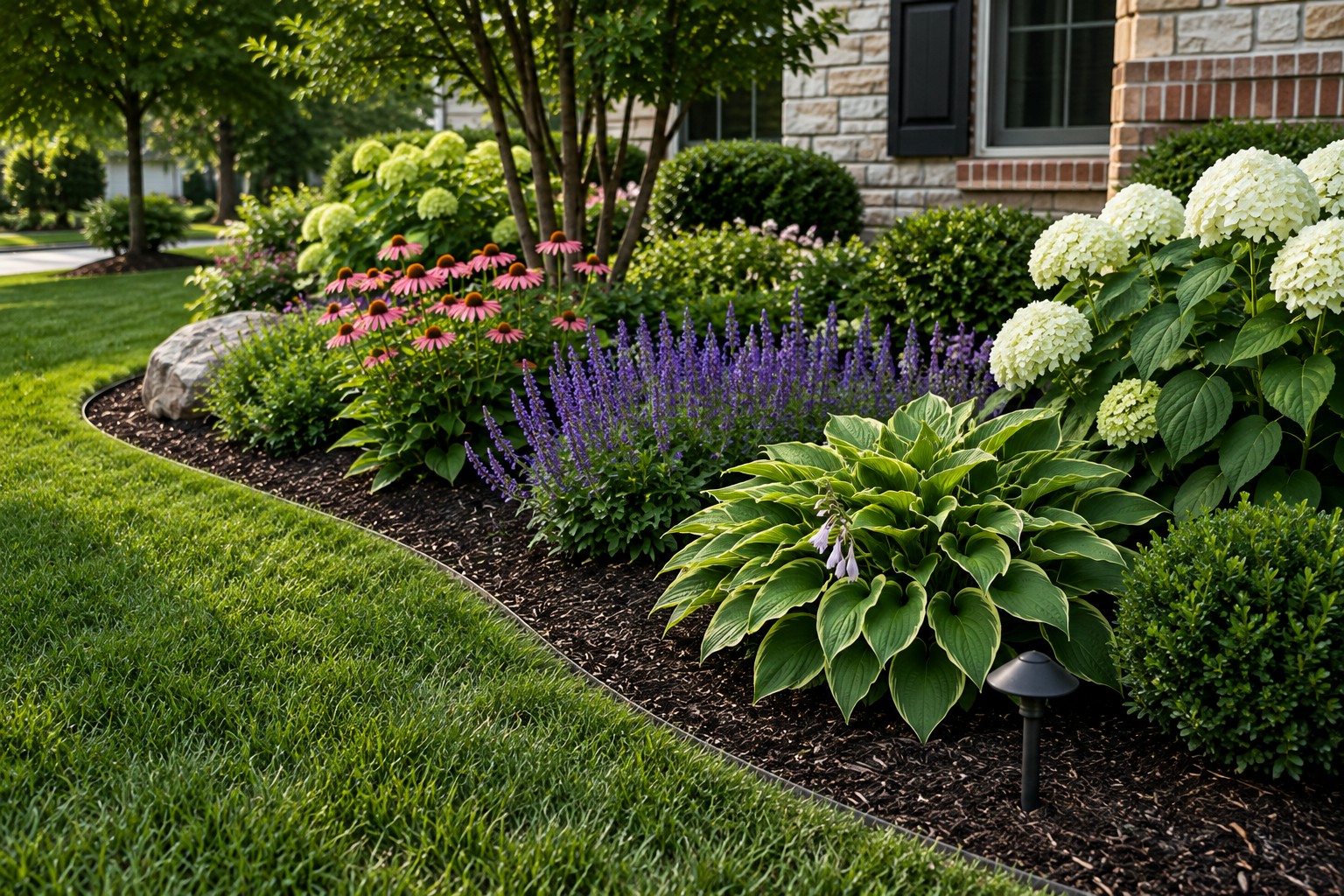
A beautiful garden bed can still look unfinished if the edge is messy.
Crisp edging creates a clear boundary between the lawn, walkway, and planting area. It helps contain mulch, makes mowing easier, and gives the entire landscape a more intentional appearance.
The best edging does not have to be complicated. It simply needs to fit the style of the garden and be maintained consistently.
Why Garden Edging Matters
A defined edge helps:
- Separate lawn from planting beds
- Keep grass from creeping into the garden
- Reduce mulch spilling onto walkways
- Make mowing and trimming easier
- Highlight the shape of the bed
- Give the landscape a cleaner, more finished look
Even a simple garden can look much more polished when the edges are neat.
Start With the Shape of the Bed
Before choosing an edging material, look at the shape of the garden bed.
Ask yourself:
- Is the bed straight or curved?
- Does the shape follow the architecture of the house?
- Are the curves gentle or overly complicated?
- Does the bed feel deep enough for the plants inside it?
- Will the edge be easy to mow around?
Simple, generous curves usually look more natural than lots of small waves.
If you are reshaping an existing bed, use a garden hose or rope to test the new line before cutting into the lawn.
Option 1: A Simple Cut Edge
A cut edge is one of the cleanest and most natural-looking options.
Instead of adding a physical border, you create a narrow trench between the lawn and garden bed.
Why it works:
- Very inexpensive
- Works with curved or straight beds
- Blends naturally into the landscape
- Easy to change later
- Does not compete visually with the plants
The downside is maintenance. The edge needs to be recut periodically as grass grows back toward the bed.
How to Create a Cut Edge
Use a sharp spade or half-moon edger.
Cut straight down along the desired bed line, then remove a small amount of soil on the garden side to create a shallow trench.
The lawn side should remain crisp and nearly vertical.
Mulch can extend toward the trench, but avoid filling it completely or the clean separation will disappear.
Option 2: Metal Edging
Metal edging creates a thin, crisp line that nearly disappears once installed.
It works especially well in contemporary, transitional, and formal landscapes.
Common materials include:
- Steel
- Aluminum
- Corten steel
Why it works:
- Creates a very clean edge
- Works with curves
- Requires less routine recutting than a natural edge
- Visually unobtrusive
- Durable when installed properly
Make sure the top is installed at a safe height so it does not become a tripping or mowing hazard.
Option 3: Brick or Paver Edging
Brick or paver edging adds a more visible architectural detail.
It can work beautifully around traditional homes, cottage gardens, and landscapes where similar materials are already used in walkways or patios.
Why it works:
- Adds a finished, intentional detail
- Creates a strong boundary
- Can coordinate with existing hardscape
- Makes mowing along the edge easier when installed flush
For a timeless look, choose materials that relate to the house rather than introducing an unrelated color or style.
Option 4: Natural Stone
Natural stone can create a softer, more organic border.
It works particularly well in woodland gardens, cottage gardens, and landscapes with existing stonework.
Why it works:
- Adds texture
- Feels natural in informal gardens
- Can complement stone paths or retaining walls
- Works well on sloped areas
Avoid using lots of tiny rocks lined up like teeth.
Larger, substantial stones generally look more intentional.
Option 5: Plastic or Composite Edging
Flexible plastic or composite edging is inexpensive and easy to find.
It can be useful where the goal is simply to keep lawn and mulch separated.
Why it works:
- Budget friendly
- Flexible
- Relatively easy to install
- Works with curved beds
The main challenge is installation.
If it sits too high above the soil, it can become visually distracting or get caught by lawn equipment.
Install it carefully and keep as much of the material hidden as practical.
Keep Edging Consistent
One of the easiest ways to make a landscape feel disjointed is to use a different edging material around every bed.
Whenever possible, choose one primary edging style and repeat it throughout the property.
You may use a different material in a special area, but consistency usually creates a calmer, more polished look.
Consider the House
The edging should relate to the architecture and materials already present.
For example:
- Brick homes often pair beautifully with brick or simple cut edging
- Stone homes may work well with natural stone
- Modern homes often suit thin metal edging
- Cottage-style landscapes often look best with natural cut edges, brick, or stone
The edge should support the garden, not become the main feature.
Keep Mulch Below the Edge
Mulch should stay contained inside the garden bed.
If mulch is spilling across the lawn or walkway, the edge will quickly lose its clean appearance.
After mulching, rake the material slightly lower near the border.
This creates a visible line and helps keep mulch in place during rain or irrigation.
Watch for Grass Creep
Grass can slowly spread into garden beds even when the edge initially looks perfect.
Check the perimeter periodically for:
- Runners
- Rhizomes
- Clumps growing into the mulch
- Weeds establishing along the border
Removing small invasions early is much easier than reclaiming an entire edge later.
Edge Before You Mulch
If you are refreshing the garden for the season, edge the beds first.
A simple order is:
- Shape or redefine the bed
- Remove grass and weeds
- Clean up the soil line
- Prune or tidy plants as needed
- Add mulch last
Fresh mulch against a crisp edge gives the garden an immediate finished appearance.
Avoid Overly Narrow Beds
Sometimes the edge looks awkward because the bed itself is too narrow.
A row of shrubs squeezed into a thin strip between the house and lawn can feel cramped even with perfect edging.
If the plants are constantly spilling into the lawn, consider expanding the bed rather than continually cutting the plants back.
A deeper bed often creates better proportions and gives plants room to grow naturally.
Use Edging to Improve the Garden’s Shape
Edging is also an opportunity to correct awkward bed lines.
Look for:
- Tiny unnecessary curves
- Sharp points that are difficult to mow around
- Beds that abruptly narrow
- Plants sitting outside the visual shape of the bed
A cleaner outline can make the entire landscape feel more intentional without adding a single plant.
Curves Should Feel Natural
Curved beds can be beautiful, but the curves should be broad and purposeful.
Avoid a series of tight little scallops.
A good curve should feel as though it belongs to the overall shape of the yard.
Stand back from the house or view the bed from the street before committing to the line.
Make Maintenance Easy
A beautiful edge that is impossible to maintain will eventually become frustrating.
Think about:
- How you mow
- Where the string trimmer needs to go
- Whether leaves collect along the edge
- Whether mulch repeatedly washes out
- How often you are willing to recut the border
The best edging solution is one you can realistically keep looking good.
A Simple Formula
If you are unsure what type of edging to use:
- Choose a cut edge for the most natural and flexible option
- Choose metal for a clean, nearly invisible permanent line
- Choose brick or pavers when you want the edge to coordinate with the architecture
- Choose natural stone for a more organic garden
- Choose plastic or composite when budget and easy installation are the priority
Then use that choice consistently.
The Finishing Touch
Garden edging is not the most exciting part of landscaping, but it has an outsized effect on how finished a garden looks.
A clear boundary, fresh mulch, and thoughtfully shaped beds can make even simple planting feel much more intentional.
You do not need elaborate materials.
You just need a clean line—and the willingness to maintain it.
Leave a Reply