
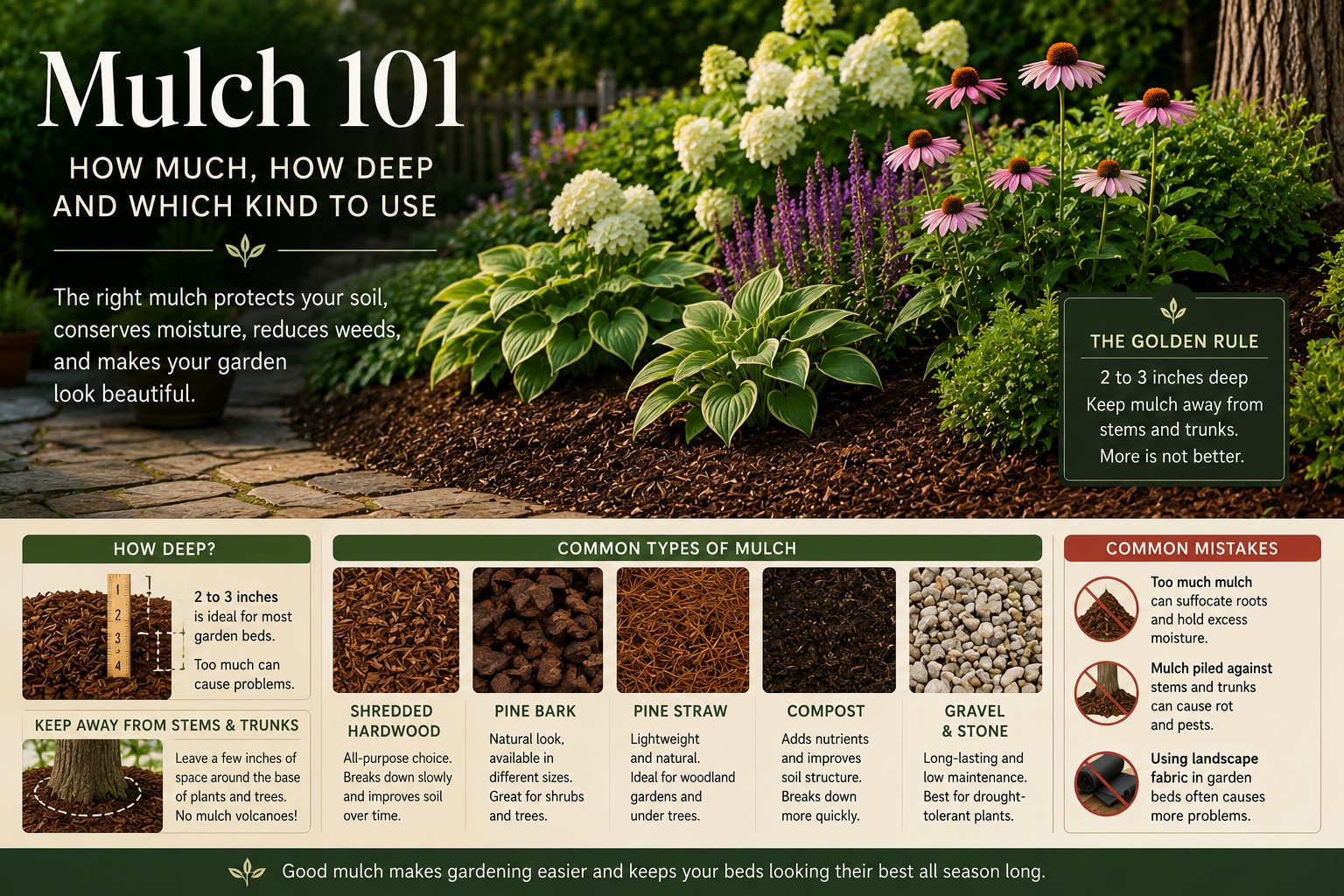
Mulch is one of the simplest things you can add to a garden, but using the wrong kind—or piling on too much—can cause more problems than it solves.
Used properly, mulch helps conserve moisture, moderate soil temperature, reduce weeds, protect the soil surface, and give garden beds a finished look.
The key is choosing the right material and using the right amount.
Why Mulch Matters
Mulch creates a protective layer over the soil.
It can help:
- Slow moisture loss
- Reduce weed growth
- Protect soil from erosion
- Buffer soil temperatures
- Reduce mud splashing onto foliage
- Improve the appearance of garden beds
- Add organic matter over time, depending on the material
Mulch is useful, but it should support the soil—not smother it.
How Deep Should Mulch Be?
For most garden beds, 2 to 3 inches of mulch is enough.
That depth usually provides good weed suppression and moisture retention without creating a heavy, soggy layer.
Too little mulch may not do much.
Too much mulch can:
- Hold excess moisture
- Reduce oxygen around roots
- Encourage shallow rooting
- Create habitat for pests
- Cause bark or stems to stay damp
More is not always better.
Keep Mulch Away From Stems and Trunks
One of the most common mulch mistakes is piling it directly against plants.
Leave a little breathing room around:
- Tree trunks
- Shrub stems
- Perennial crowns
Mulch pressed against bark can hold moisture where you do not want it and may contribute to decay or pest problems.
Around trees, avoid the familiar “mulch volcano.”
Keep the root flare visible and spread mulch outward instead of upward.
Shredded Hardwood Mulch
Shredded hardwood is one of the most common choices for landscape beds.
It works well because it:
- Holds in place reasonably well
- Breaks down gradually
- Adds organic matter over time
- Works in both formal and informal gardens
It is a practical all-purpose choice for many residential landscapes.
Pine Bark Mulch
Pine bark comes in different sizes, from fine particles to larger nuggets.
It tends to have a more natural woodland look and works especially well around shrubs and trees.
Larger bark pieces may move more easily on slopes or during heavy rain, so they may not be ideal everywhere.
Pine Straw
Pine straw is lightweight and easy to spread.
It works especially well in regions where pine needles are common and can create a soft, natural appearance.
It is useful around shrubs, trees, and woodland-style gardens.
Because it is light, it may need refreshing more often than heavier mulch materials.
Cedar Mulch
Cedar mulch is popular for its appearance and scent.
It breaks down more slowly than some other organic mulches, which can be helpful if you do not want to refresh beds as often.
Like other wood mulches, it should be kept away from plant stems and trunks.
Compost as Mulch
Finished compost can also be used as a light mulch or top dressing.
It adds organic matter and nutrients while helping improve soil structure.
Because compost breaks down more quickly than wood mulch, it may not suppress weeds as long.
It can be especially useful in vegetable gardens and perennial beds.
Gravel and Stone
Gravel and decorative stone are inorganic mulches.
They do not break down and can work well in certain garden styles, especially around drought-tolerant plants.
But they behave very differently from organic mulch.
Stone can:
- Absorb and reflect heat
- Make soil hotter
- Be difficult to remove later
- Mix into the soil over time
- Make planting changes more difficult
Use stone intentionally rather than simply because it lasts longer.
What About Rubber Mulch?
Rubber mulch is often marketed as a long-lasting option.
For most garden beds, organic mulch is usually a better fit because it works with the soil and eventually breaks down.
Rubber may be useful in some play areas or specialty applications, but it is generally not my first choice around ornamental plants.
Should You Remove Old Mulch Before Adding More?
Usually, no.
If the existing mulch has partially broken down and the total depth is still reasonable, you can often simply add a thin fresh layer.
Before adding more:
- Rake or loosen compacted mulch
- Remove weeds
- Check the existing depth
- Add only enough to bring the total back to about 2 to 3 inches
Do not automatically add another thick layer every year.
When Is the Best Time to Mulch?
Mulch can be applied almost any time, but spring and fall are especially common.
Spring
Mulching in spring helps conserve moisture and suppress weeds before summer heat arrives.
Wait until the soil has had a chance to warm if you live in a colder climate.
Fall
Fall mulch can help moderate soil temperature and protect roots through winter.
It is also a good time to refresh beds after seasonal cleanup.
Mulch Around New Plants
Newly planted trees, shrubs, and perennials can benefit from mulch because it helps keep the surrounding soil more evenly moist.
Spread mulch around the root zone, but keep it slightly away from stems and trunks.
This can reduce competition from weeds and help new roots establish more comfortably.
Avoid Landscape Fabric Under Organic Mulch
Landscape fabric may seem like an easy weed solution, but in many ornamental beds it becomes frustrating over time.
Organic matter and soil collect on top of the fabric, allowing weeds to grow anyway.
It can also make future planting, dividing, and soil improvement more difficult.
A good layer of mulch over properly prepared soil is often easier to manage long term.
Match the Mulch to the Garden
There is no single best mulch for every space.
For most residential garden beds, a natural organic mulch such as shredded hardwood or pine bark is a practical choice.
For woodland gardens, pine straw may look more natural.
For vegetable or cutting gardens, compost can be useful.
For dry, heat-loving plantings, gravel may make sense if the plants and climate suit it.
A Simple Mulch Rule
For most ornamental garden beds:
- Use an organic mulch
- Apply about 2 to 3 inches
- Keep it away from trunks and stems
- Check the existing depth before adding more
- Refresh only when needed
Mulch should quietly make the garden easier to care for.
When it is applied correctly, it helps the soil, reduces maintenance, and makes the entire bed look more finished.
Leave a Reply