
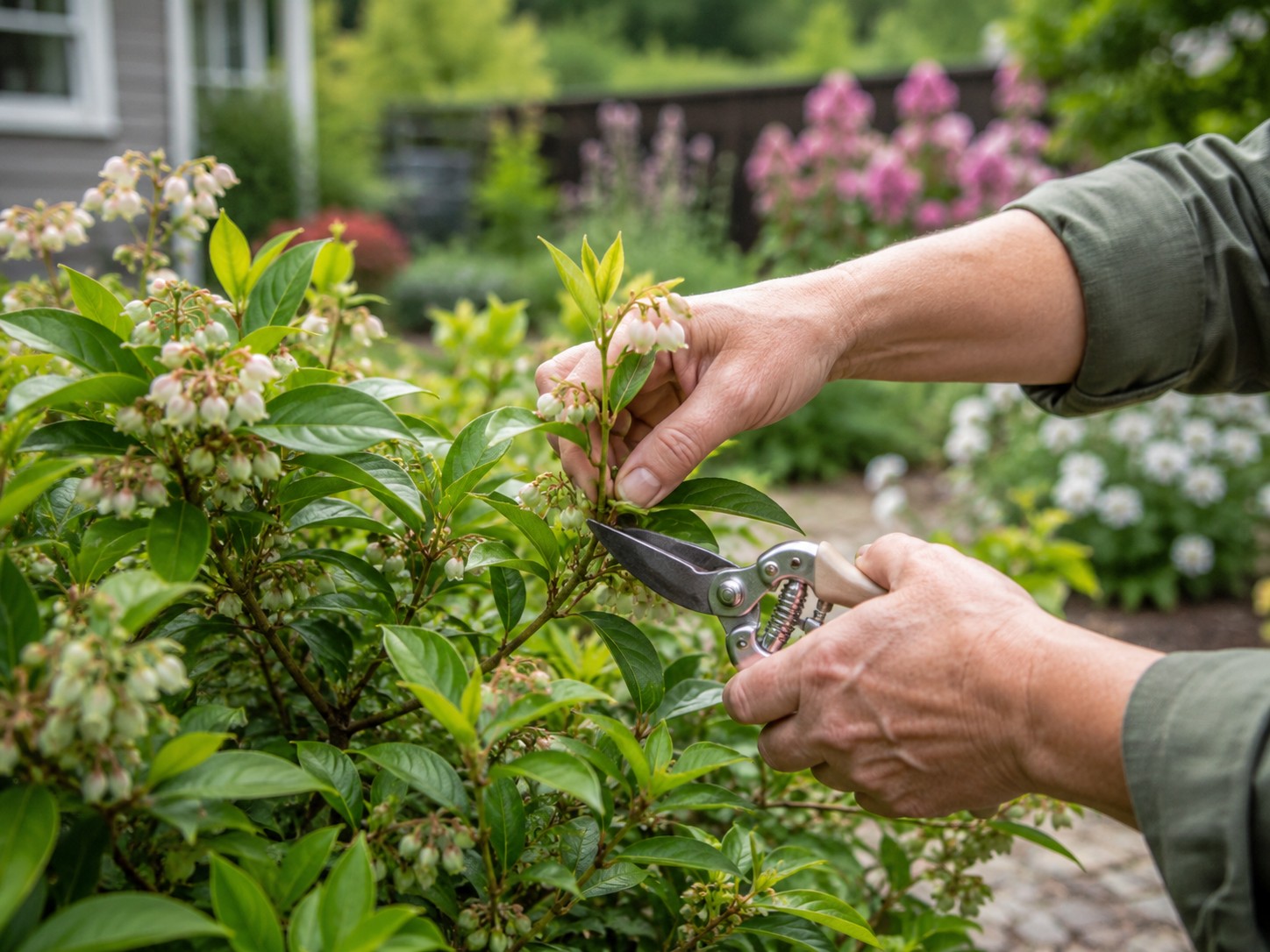
Pruning can make plants healthier, more attractive, and easier to manage, but only when it is done for the right reason and at the right time.
The good news is that you do not need to become an expert in complicated pruning techniques to take good care of most garden plants.
Start by understanding why you are pruning, make clean cuts, and avoid removing more than the plant can comfortably replace.
Why Prune a Plant?
Good reasons to prune include:
- Removing dead, damaged, or diseased growth
- Improving the plant’s shape
- Removing branches that cross or rub
- Controlling size when appropriate
- Encouraging fresh growth or flowering
- Improving airflow
- Keeping branches away from paths, structures, or windows
Pruning should usually solve a specific problem.
If you cannot identify why a branch needs to be removed, it may be better to leave it alone.
Start With Dead, Damaged, or Diseased Growth
Dead or damaged branches are usually the easiest place to begin.
Look for:
- Broken branches
- Dead tips
- Split stems
- Diseased-looking growth
- Branches damaged by storms or animals
Dead wood can generally be removed whenever you notice it.
If you suspect disease, clean your pruning tools appropriately before moving to another plant.
Know What Kind of Plant You Are Pruning
Different plants respond differently to pruning.
Before making major cuts, identify whether the plant is a:
- Tree
- Evergreen shrub
- Deciduous shrub
- Flowering shrub
- Rose
- Vine
- Ornamental grass
- Woody perennial
- Herbaceous perennial
The correct timing and method may vary considerably.
When Should You Prune?
There is no single pruning season for every plant.
Timing often depends on when a plant flowers and what type of growth produces those flowers.
Spring-Flowering Shrubs
Many spring-flowering shrubs bloom on old wood, meaning their flower buds formed during the previous growing season.
Examples can include certain:
- Azaleas
- Lilacs
- Forsythias
- Some hydrangeas
These are often pruned shortly after flowering.
Pruning them heavily in late winter can remove the buds that would have produced spring flowers.
Always check the specific plant before pruning.
Summer-Flowering Shrubs
Many shrubs that flower later in summer bloom on new wood, meaning they produce flowers on growth created during the current season.
These plants are often pruned in late winter or early spring before new growth begins.
Again, the specific plant matters.
Hydrangeas are a good example of why identification is important: different hydrangea types bloom on different kinds of wood.
Trees
Routine pruning of many deciduous trees is often done while the tree is dormant, but timing can vary by species.
Young trees may benefit from thoughtful structural pruning, while mature trees often require far less intervention than people assume.
Large limbs, high branches, branches near power lines, or hazardous trees should be handled by a qualified tree professional.
Evergreens
Evergreen shrubs and conifers do not all respond well to hard pruning.
Some will not reliably grow back from old bare wood.
Before cutting an evergreen far below its existing foliage, find out how that particular plant responds.
Light shaping is very different from severe renovation pruning.
Perennials
Many herbaceous perennials can be cut back after flowering or after the foliage dies back for the season.
But leaving some stems and seedheads through winter can provide:
- Winter interest
- Food for birds
- Habitat for beneficial insects
There is no rule that every perennial must be cut to the ground in fall.
Ornamental Grasses
Many deciduous ornamental grasses are left standing through winter and cut back before new spring growth begins.
Their dried foliage can add movement and structure during the dormant season.
Evergreen grasses and grass-like plants may need only light cleanup rather than being cut completely down.
Use the Right Tool
Clean, sharp tools make better cuts and are easier on plants.
Common pruning tools include:
- Hand pruners for smaller stems and branches
- Loppers for thicker branches
- Pruning saws for branches too large for loppers
- Hedge shears for plants intentionally maintained as hedges
Do not force a small hand pruner through a branch that is too large for it.
That can damage both the tool and the plant.
Make Clean Cuts
For many shrubs and perennials, make cuts just above a healthy bud, branch, or appropriate growth point.
Avoid leaving long dead stubs.
On trees, proper branch-removal cuts are especially important. Avoid cutting flush against the trunk or leaving unnecessarily long stubs.
If you are unsure about a large tree branch, it is worth getting professional guidance rather than guessing.
Remove Crossing and Rubbing Branches
Branches that grow into one another can rub as the wind moves them.
Over time, that can damage bark and create entry points for disease or decay.
When two branches cross badly, choose the better-positioned branch and remove the weaker or poorly placed one.
Thin Rather Than Shear When Appropriate
Repeatedly shearing every shrub into a tight ball can create dense outer growth while leaving the interior crowded and bare.
For naturally shaped shrubs, selective thinning cuts often produce a healthier and more attractive result.
Remove individual branches back to their origin or to a suitable side branch instead of trimming every stem to the same outer line.
Formal hedges are an exception because their clipped form is intentional.
Do Not Remove Too Much at Once
Heavy pruning can stress a plant.
For established trees and shrubs, avoid removing a large percentage of healthy growth in one session unless the plant specifically tolerates renovation pruning.
When a badly overgrown shrub needs major correction, it may be better to spread the work across more than one season.
Avoid Topping Trees
Tree topping means cutting major branches or the upper canopy back to stubs to drastically reduce height.
This can:
- Destroy the natural structure of the tree
- Encourage weakly attached new shoots
- Create large wounds
- Increase future maintenance
- Make the tree less attractive
If a tree has become too large for its location, repeated topping is usually not a good long-term solution.
Be Careful With Crape Myrtle Pruning
Crape myrtles are frequently cut back far more severely than necessary.
Routine topping of major limbs creates large knuckles and masses of weak new shoots.
Most established crape myrtles need relatively little pruning.
Focus instead on:
- Dead wood
- Damaged branches
- Crossing branches
- Unwanted suckers
- Small branches interfering with the desired structure
Let the tree keep its natural form whenever possible.
Do Not Prune Just Because the Calendar Says To
A generic reminder that says “prune shrubs in February” is not enough information.
Before pruning, ask:
- What plant is this?
- When does it flower?
- Does it bloom on old wood or new wood?
- Why am I pruning it?
- How much growth really needs to be removed?
Those five questions prevent many pruning mistakes.
Clean Your Tools
Keep pruning blades sharp and reasonably clean.
If you are cutting visibly diseased plant material, disinfecting tools between plants can reduce the risk of spreading pathogens.
After use, remove sap and debris and store tools somewhere dry.
Well-maintained tools make cleaner cuts and are safer to use.
What Not to Do
Avoid these common pruning mistakes:
- Topping trees
- Cutting every shrub into the same shape
- Removing large amounts of healthy growth without a reason
- Pruning spring bloomers before flowering without checking their bloom habit
- Cutting evergreens deeply into bare wood without knowing whether they will recover
- Leaving torn or ragged cuts
- Using dull tools
- Trying to handle large or dangerous tree limbs yourself
A Simple Pruning Order
When you approach a plant, work in this order:
- Remove dead growth
- Remove damaged or diseased growth
- Address crossing or rubbing branches
- Remove clearly unwanted growth
- Step back and look
- Make only the additional shaping cuts that are actually needed
That pause before step six matters.
It is much easier to remove another branch than to put one back.
Prune With a Purpose
Good pruning should usually make a plant look healthier and more natural, not obviously cut.
Learn the plant’s growth habit, understand when it flowers, remove problems first, and resist the urge to prune simply because a plant has grown.
Often, the best pruning decision is knowing when to stop.
Leave a Reply